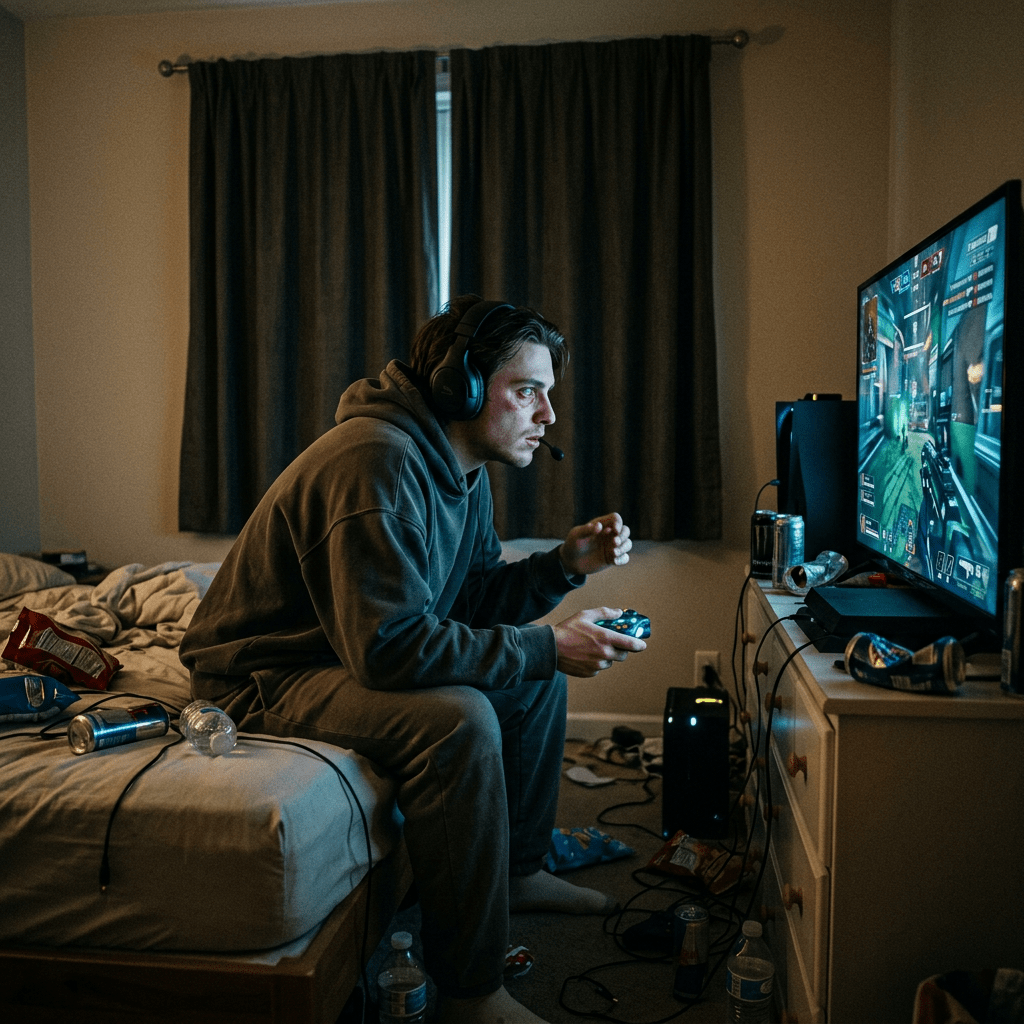
You may have stumbled across my site because you were googling what internet gaming addiction was, or perhaps you were asking if you or a loved one fit the profile of someone suffering from video gaming addiction. Perhaps you just started researching the symptoms. No matter how you ended up here, I am glad that you did. I want to help you press that reset button and reclaim your life from video game addiction. I am a mother of six whose oldest suffers from gaming addiction, and I have also recently divorced due in part to my ex’s addiction to screens. I have seen firsthand how damaging this addiction can be, and the freelance writer in me turned to my strength in looking for answers and a way out. I hit the research and hit it hard, and now I am hoping to bring all that I learned to you so that you don’t have to experience the same pain that I did.
What Is Video Game Addiction
How many hours of gaming is too much? When does it go from just harmless fun and a way to unwind to a serious problem? Not everyone who plays video games is addicted. However, video game addiction is real, and there are some ways that you can tell if you or a loved one is addicted to video games or if you suffer from internet gaming addiction.
Both the American Psychiatric Association and the World Health Organization recognize video game addiction under the heading of Internet Gaming Addiction and view it differently than problems with online gambling, use of social media, or smartphones. The American Psychiatric Association in the Diagnostic and Statistical Manual of Mental Disorders (DSM-5-TR) lists proposed symptoms and stresses that five or more must be present over a year to diagnose someone with internet gaming addiction. These include:
- Preoccupation with gaming
- Withdrawal symptoms when gaming is taken away or not possible (sadness, anxiety, irritability)
- Tolerance, the need to spend more time gaming to satisfy the urge
- Inability to reduce playing, unsuccessful attempts to quit gaming
- Giving up other activities, loss of interest in previously enjoyed activities due to gaming
- Continuing to game despite problems
- Deceiving family members or others about the amount of time spent on gaming
- The use of gaming to relieve negative moods, such as guilt or hopelessness
- Risk, having jeopardized or lost a job or relationship due to gaming
While the World Health Organization in the International Classification of Diseases (ICD-11) has defined gaming disorder as a pattern of gaming behavior, characterized by impaired control over gaming, increased priority given to gaming over other activities, and continuation or escalation of gaming despite the occurrence of negative consequences.
Not everyone who plays video games is susceptible to video game addiction; certain behaviors can increase the risks. Those include:
- Personality traits such as: Individuals with impulsive or sensation-seeking tendencies
- Pre-existing Mental Health issues: Children and Adults with Anxiety, ADHD, or Depression may use video games as a coping mechanism.
- Family Environment: Lack of parental supervision or strained family relationships can contribute to excessive gaming.
- Peer influence: Pressure to play games to fit in socially can lead to extended gaming sessions.
It is important to note that individuals who spend a great deal of time playing video games might not be addicted; they have to meet the other criteria. If you aren’t sure whether you or a loved one is addicted to video games, you can try my short reset, where you give up video games temporarily to see if the addiction is true or if playing games is simply a way for you to unwind and relax.
Signs of Gaming Addiction
Video game addiction, formally referred to as internet gaming disorder, manifests through a variety of behavioral, emotional, and physical indicators that disrupt daily functioning. Key signs and symptoms include:
- Significant Functional Impairment: Observing a marked decline in performance at school or work, or the consistent neglect of household responsibilities because gaming sessions take precedence over necessary obligations.
- Emotional Withdrawal: Experiencing acute withdrawal symptoms, including irritability, anxiety, or profound sadness, when the ability to play is restricted or gaming hardware is removed.
- Building Tolerance: Developing a need to devote increasingly large blocks of time to video games to achieve the same psychological reward or level of excitement previously felt.
- Social and Recreational Displacement: Systematically withdrawing from social relationships and abandoning hobbies or activities that were once a source of joy in favor of gaming.
- Loss of Control: Making repeated, unsuccessful efforts to cut back on gaming time or quit entirely, even when the individual recognizes the negative impact on their life.
- Deceptive Behavior: Lying to friends, family members, or therapists regarding the actual duration or frequency of video game play.
- Neglect of Self-Care: A noticeable deterioration in personal hygiene, grooming habits, or physical health as a direct result of excessive preoccupation with gaming.
- Escapism and Mood Regulation: Frequently utilizing video games as a primary strategy to evade real-world stressors or to temporarily alleviate negative emotional states such as guilt, anxiety, or hopelessness.
If you or someone close to you is exhibiting several of these behaviors, it is advisable to consult a healthcare provider or a qualified mental health professional for further assessment and support.
Effects of Gaming Addiction on Mental Health
The impact of video game addiction on mental health is profound, frequently exacerbating underlying conditions such as anxiety and depression in children and adults alike. A primary driver of this deterioration is the resulting social isolation; dedicating excessive hours to virtual worlds often intensifies feelings of loneliness and despondency. Furthermore, compulsive gaming tends to severely disrupt sleep patterns, and chronic sleep deprivation significantly impairs cognitive function and the ability to maintain emotional stability. This creates a negative feedback loop where the individual uses screens to avoid uncomfortable feelings, which only reinforces the habit.
In an academic setting, this disorder typically manifests as a marked decline in performance as gaming sessions take precedence over homework and study obligations. Students may find that screen time stretches much longer than intended, leading to significant functional impairment. For adults, the consequences often include diminished productivity in the workplace, which can unfortunately jeopardize professional standing or even lead to the loss of employment. Beyond professional risks, the preoccupation with gaming can lead to the neglect of household responsibilities and a noticeable deterioration in personal hygiene and self-care.
Gaming Addiction in Relationships
The following are some of the signs that your partner is addicted to video games:
- They would rather be gaming than attend to you, themselves, or their job.
- They will play late into the night and often sacrifice their sleep. Sex and nighttime conversations are often out of the question.
- They do not want to discuss their mood or feelings.
- They refuse to admit that there is a problem.
- They refuse to reduce their gaming time.
- They often forget about their commitments.
- They consistently break their promise to spend more time with you.
- They lash at you for ‘not understanding’ whenever you bring up the issue of their gaming compulsion.
- They won’t consider therapy for their gaming obsession.
Research done on the topic reveals that, at times, it is not the time spent gaming that causes problems in the marriage, but rather, it is the resulting arguments that accompany when the other spouse complains. Moreover, compulsive gaming causes issues such as poor marital adjustment that comes from not doing things together or having serious conversations. The result is that the bond that they had starts to weaken and eventually reaches a point where the marriage becomes insufferable. At this point, divorce is usually the only option left.
How to Stop Gaming Addiction
Establish your “digital detox”: start by uninstalling and deleting all games, gaming platforms, and related apps from your devices. This immediate removal reduces the friction of access and prevents impulsive play during weak moments.
Purge hardware: hide or sell consoles, specialized controllers, and gaming peripherals. If you need a computer for work, restrict it to a low-power laptop and eliminate the graphics card to make high-end gaming technically impossible.
Block sites: Use website blockers or app limits on your phone to restrict access to gaming news, YouTube, and Twitch streams. Constant exposure to gaming content can trigger cravings and lead to relapse.
Identify and replace the underlying needs: People often game to fulfill specific psychological needs. Figure out why you play and replace those needs in the real world with the following alternatives:
- For escape/stress relief: Replace gaming with reading, journaling, meditating, or an offline hobby like painting or playing an instrument.
- For a sense of achievement and progress: Games are designed to give you a constant sense of measurable growth. You can replace this by taking up fitness (tracking workout metrics) or learning a new skill like coding or a language.
- For social connections: Plan offline social activities, join local sports leagues, or find community groups to engage with others face-to-face rather than through a headset.
Structure Your Day to Fight Boredom: Open unstructured time is the biggest trigger for relapse. Create a daily agenda that maps out your day from the moment you wake up to bedtime. Schedule your most demanding tasks or physical activities for the morning. Expect to feel bored as your brain detoxes from “cheap dopamine”. Recognize that boredom isn’t a problem to be solved immediately, but a signal that your brain is healing and relearning how to find satisfaction in normal activities.
Build a supportive environment: Establish boundaries, let your gaming friends know you are taking a break, and ask them not to invite you to play. You may need to distance yourself from friends who do not respect this boundary to protect your recovery.
Join a community: You don’t have to do it alone. Consider connecting with others on support platforms like the Reddit Stop Gaming community or the Game Quitters forum.
Seek professional help: If you feel your addiction is tied to underlying mental health conditions like depression, anxiety, or ADHD, consider seeing a licensed therapist who specializes in cognitive behavioral therapy or internet gaming disorder.
 The Reset Button